Who this is for
If you can't say who's in your building right now, or whether your attendance numbers are accurate, this is for you.
You probably need this if…
- Manual registers or spreadsheets are causing attendance and payroll disputes.
- You have no record of who entered a door and when.
- Existing biometric devices are old, slow or increasingly unreliable.
- You're opening a new office or branch and need access control from day one.
- An audit flagged the absence of access logs or role-based permissions.
- Tailgating or shared credentials are a recurring concern.
Where it applies
Probably not the right fit when…
- A two- or three-person office where a physical key is still perfectly practical.
- Attendance tracking alone with no door-control requirement — a simpler standalone device may suffice.
Technical overview
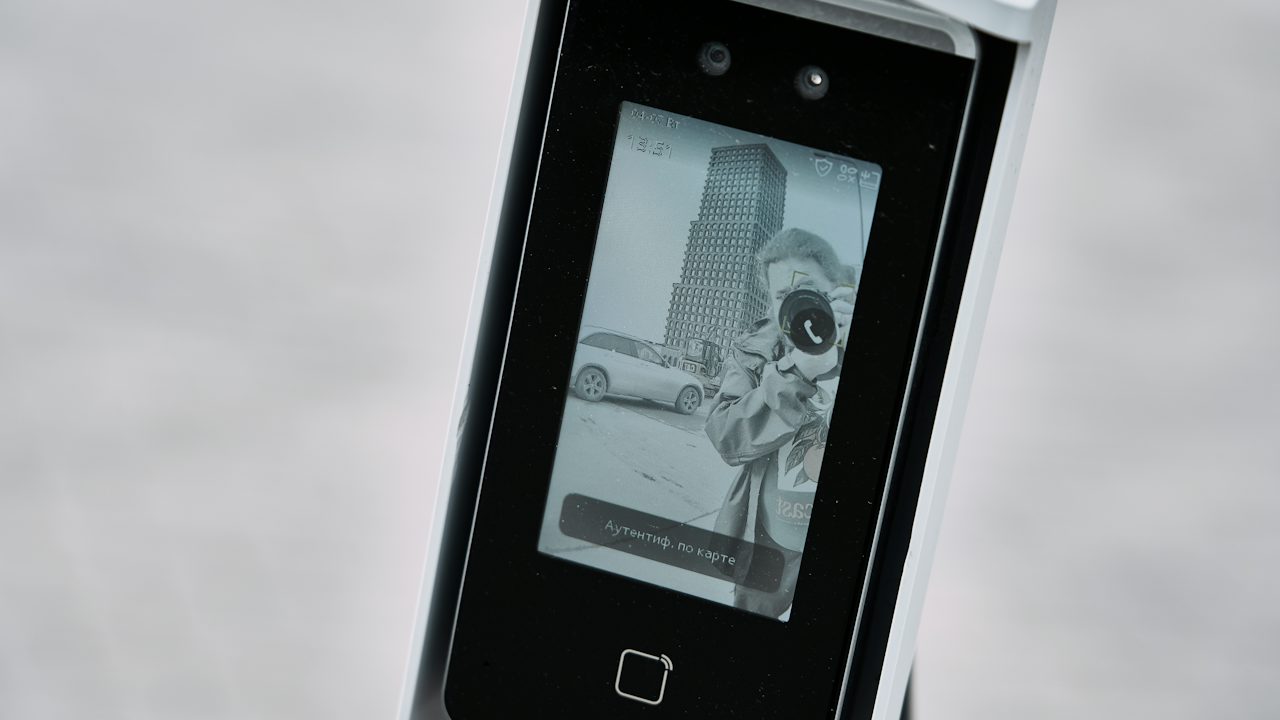
Access control decides who can go where, and attendance systems decide who's accounted for. We design both on a segregated network, specify biometric or card-based identity to match the risk, and integrate access events into the same security picture as CCTV and fire.
Technologies we work with
Reference architecture
Design principles
- Define access groups, door schedules, anti-passback requirements and emergency egress behaviour before selecting controllers and locks.
- Select fail-safe or fail-secure locking behaviour according to door function, applicable life-safety requirements and the approved fire strategy.
- Evaluate biometric accuracy, verification time, presentation-attack resistance, privacy and queue throughput together.
- Apply least privilege, protected credential storage, role-based administration and auditable changes across access and attendance systems.
Specification baseline
| Aspect | Specification | Why it matters |
|---|---|---|
| Credential security | Prefer secure credentials with cryptographic protection where supported | Static identifiers alone provide limited protection against cloning and replay. |
| Door control | Use supervised door contacts, monitored lock outputs where available and documented emergency-release behaviour | Monitoring helps distinguish forced entry, held-open doors and equipment faults. |
| Biometrics | Evaluate false-match and false-non-match performance, presentation-attack controls and verification latency | Accuracy and speed depend on modality, environment and operating threshold. |
| Attendance | Define shift rules, grace periods, exceptions, correction approvals and audit history with HR | Explicit rules reduce inconsistent payroll calculations. |
| Privacy | Justify biometric collection and retention, restrict access and implement applicable privacy requirements | Biometric records require careful access control and lifecycle management. |
| Integration | Synchronise authorised worker status and role changes through controlled interfaces | Prompt deprovisioning reduces access remaining after role changes or termination. |
Key design decisions
Primary credential
Fast throughput, convenience and integration with existing enterprise badges are priorities.
A justified assurance requirement supports biometric processing and acceptable verification time and privacy controls.
Controller placement
A protected equipment room and practical cable routes are available for door circuits.
Local door autonomy, reduced field cabling or building-level resilience is required.
Sizing & calculations
Controller quantity = ceiling of controlled doors divided by supported doors per controller, subject to I/O and topology constraints.
36 doors with controllers supporting 4 doors each require at least 9 controllers before spare capacity or special I/O needs.
Peak reader throughput = expected arrivals during the peak window divided by the duration of that window.
600 users arriving over 10 minutes require an average throughput of 60 successful entries per minute across entry points.
Estimate queue length using arrival rates and measured service time, then validate against physical passage delays and retries.
A reader processing one transaction every 2 seconds theoretically supports 30 transactions per minute before exceptions and passage delays.
Standards, protocols & references
Handover documentation
- Door, reader and controller schedules
- Access group and permission matrix
- Lock and emergency-release test results
- Attendance policy and payroll interface specification
- Administrator roles and audit configuration
- Credential enrolment and deprovisioning procedures
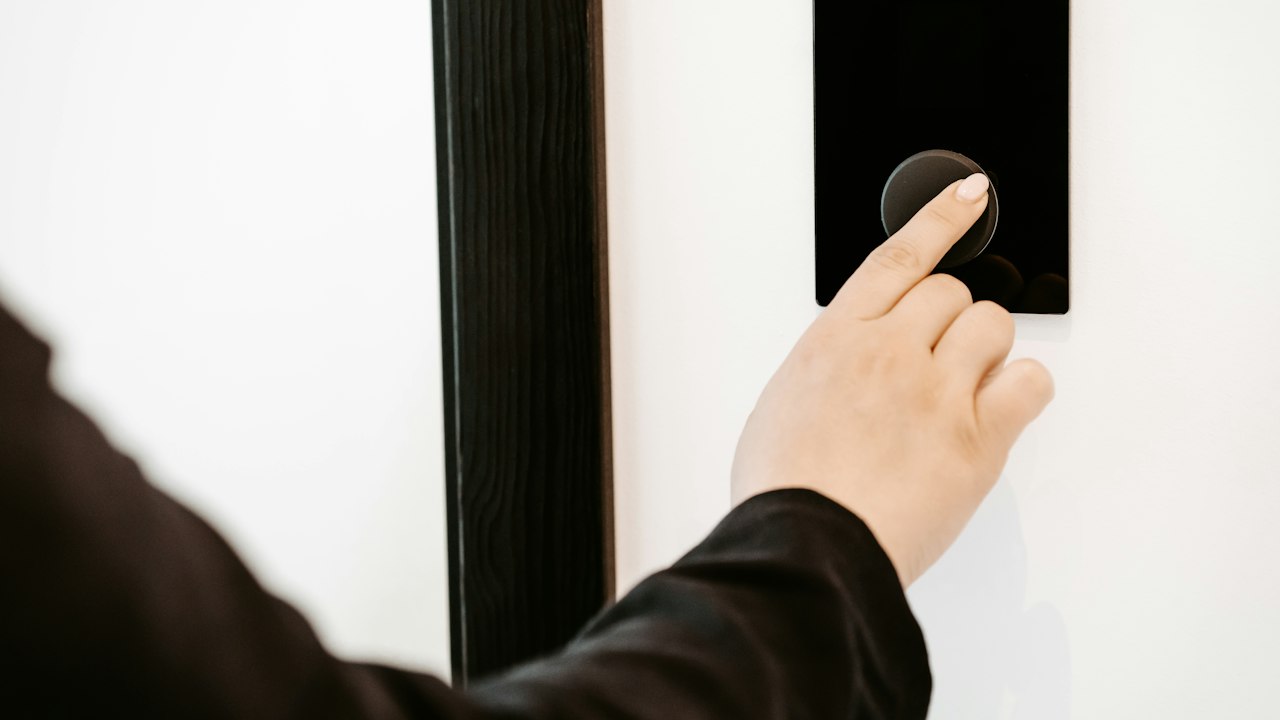
What you get
- Every door event logged against a named identity
- Attendance data that feeds payroll without manual reconciliation
- Access, attendance and CCTV reading from the same event log
What we deliver
Access control
- Door controllers and credentials
- Role-based access policies
- Intrusion detection
Biometric attendance
- Fingerprint, face or RFID attendance devices
- Shift and roster integration
- Real-time attendance reporting
Integration & security
- Segregated VLAN for access systems
- Event correlation with CCTV
- Audit logging and reporting